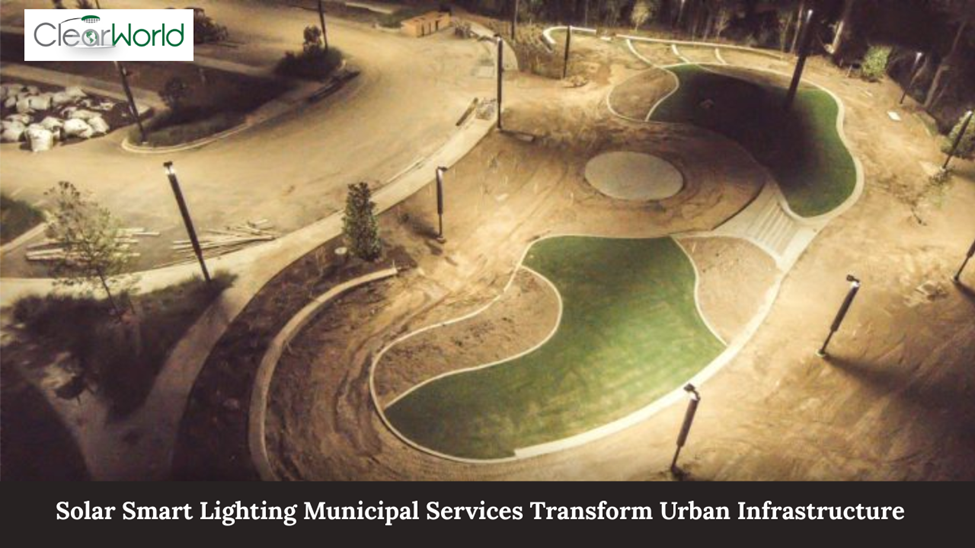
Walk into any municipal budget meeting and sooner or later, street lighting comes up. The bills are too high. The maintenance crew has been out three times this month already. A stretch of road near the school has been dark for two weeks, and nobody can agree on who is responsible for fixing it. It is a familiar story, and the frustrating part is that most cities are managing their lighting the same way they always have, patching a system that was never designed to be cost-efficient or self-sufficient. Solar Smart Lighting Municipal Services offer a genuine way out of that cycle. They replace the reactive, grid-dependent approach with something that generates its own power.
So what exactly is being offered here? Municipal servicescombine solar-powered LED fixtures with intelligent monitoring and control systems to deliver public lighting that runs completely off the utility grid. Panels collect energy throughout the day. Batteries store it. After sunset, high-efficiency LED fixtures draw on that stored power to light streets, pathways, parks, and public spaces through the night. Layered on top of that is smart technology: sensors that detect movement, dashboards that show real-time fixture status, and connectivity infrastructure that opens the door to broader smart city applications. This blog breaks down exactly how these services work.
Understanding Solar Smart Lighting Municipal Services
There is a tendency to treat solar lighting as a one-for-one product substitution, swapping a traditional bulb for a solar-powered one and calling it done. Solar smart lighting municipal services are something more considered than that. They cover the full lifecycle of public lighting infrastructure, from system design and installation through to ongoing management and performance optimisation. Here is what that actually looks like in practice:
Energy Independence
Every solar smart fixture runs entirely on the power it has generated and stored itself. When a storm knocks out the grid, the lights stay on. There is no utility connection to fail, which means there is no darkness waiting on the other side of a bad weather event.
Remote Management
Operators can monitor every single fixture from a central platform without leaving their desk. Battery charge, light output, and operational status are all visible in real time. When something needs attention, the system flags it early rather than waiting for a resident to report that a light has been out for a week.
Adaptive Controls
Roads are not equally busy at every hour of the night. Smart fixtures respond to that reality. Motion sensors bring lights to full brightness when activity is detected and allow them to dim during quieter periods, making the most of stored energy without cutting corners on safety.
Modular Installation
One of the most practical aspects of modern solar smart systems is that they attach to existing poles through retrofit technology. Cities do not need to tear out what they have built. The upgrade layers onto existing infrastructure, which keeps project timelines short and costs manageable.
Scalable Networks
A municipality lighting a single neighborhood and one managing a city-wide network use the same underlying technology. Systems are built to grow incrementally, adding fixtures and expanding coverage as budgets allow, without the entire network needing to be redesigned each time.
What Benefits Do Solar Smart Lighting Municipal Services Genuinely Deliver?
It is reasonable to want specifics. What actually changes for a city that makes this investment? The honest answer is that the changes show up in places that matter most: budget lines, maintenance logs, and how residents describe their own streets.
Cost Reduction
The utility bill for street lighting disappears. That alone represents a significant recurring saving, but the financial impact goes further when maintenance callouts drop, labor hours shrink, and emergency repairs become far less frequent. Solar smart lighting municipal services build savings that grow over time rather than shrinking as energy costs rise.
Improved Safety
Consistent, reliable lighting at intersections, walkways, parks, and parking areas changes how people move through public spaces. Accidents decrease. Criminal activity in poorly lit areas declines. The communities that have made this shift report that residents feel the difference, not just statistically but personally.
Sustainability Goals
Every solar fixture operating in place of a grid-powered one reduces a city’s carbon output in a direct and measurable way. For municipalities with emissions targets or formal sustainability commitments, solar public lighting is one of the most scalable steps available.
Infrastructure Longevity
These systems are designed for the outdoors seriously. High winds, flooding, extreme temperatures, solar smart poles are built to handle real environmental pressure and keep delivering consistent performance across a lifespan measured in decades, not years.
Community Connectivity
Smart poles that carry their own power and IoT connectivity can host public Wi-Fi access points, environmental sensors, emergency call stations, and EV charging readiness. The lighting infrastructure becomes a platform for broader municipal services, not just a collection of lights.
How They Are Making A Real Difference?
These Solar Smart Lighting Municipal Services are not pilots or experiments. They are operating infrastructure, running in real communities across a wide range of environments.
Highway Corridors
Rural and remote highway stretches that could never be connected to the grid cost-effectively now carry reliable solar lighting. Emergency responders operating in those areas report meaningfully improved visibility, which makes a real difference when every minute counts.
Urban Neighborhoods
Residential streets and commercial corridors retrofitted with solar smart poles see lower maintenance costs and stronger resident confidence in public safety. The upgrade happens with minimal disruption because existing poles stay in place.
Public Parks
Green spaces that used to empty at dusk now support evening activity. Stored solar energy keeps park lighting running through the night, extending the hours those spaces are genuinely useful for the communities they serve.
Government Campuses
Facilities that cannot afford to have lighting failures during grid disruptions have adopted solar smart lighting for its independence and consistency. The systems deliver reliable performance precisely in the conditions where traditional infrastructure tends to fail.
Commercial Districts
Retail and mixed-use developments benefit from lower shared-area energy costs and the kind of consistent nighttime illumination that keeps spaces welcoming and active well past closing time.
Conclusion
Solar Smart Lighting Municipal Services are reshaping what cities can realistically expect from public lighting. Lower operating costs, stronger safety outcomes, grid independence, and a connected infrastructure platform all follow from the same decision. For municipalities that have been managing public lighting the hard way for long enough, solar smart lighting is not a future ambition. It is a working solution available right now.